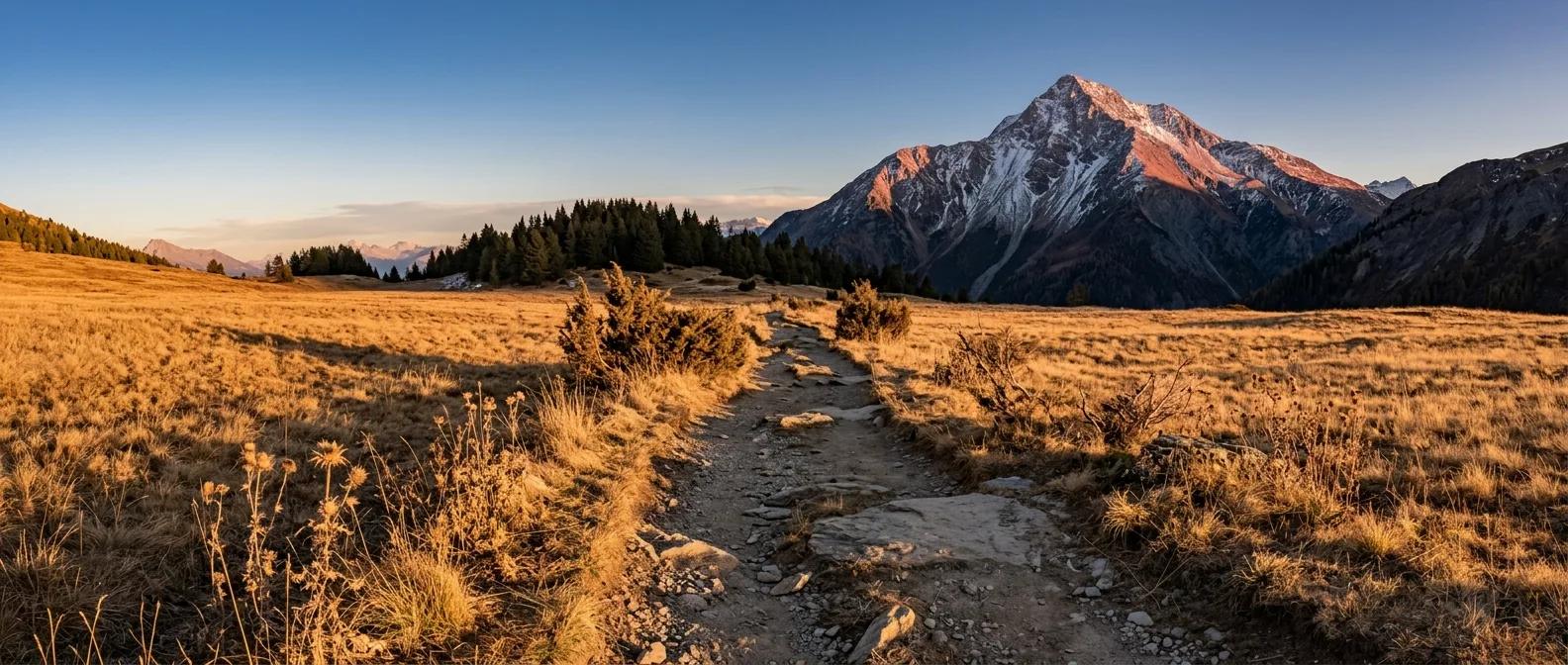
Kandersteg, Bernese Oberland — est. concept
The long way up
one small range.
Feldweg is three IFMGA mountain guides running ski tours, alpine ascents and hut-to-hut traverses in the Bernese Oberland. Four guests per guide, never more. We are not a booking engine — we are the people who will tell you honestly whether you are ready.
- Season
- Ski touring to mid-May
- Snowpack
- Moderate wind slab above 2,600 m
- Next open date
- 2 May Blüemlisalp, 2 places
- Guide ratio
- 1:4 maximum, always
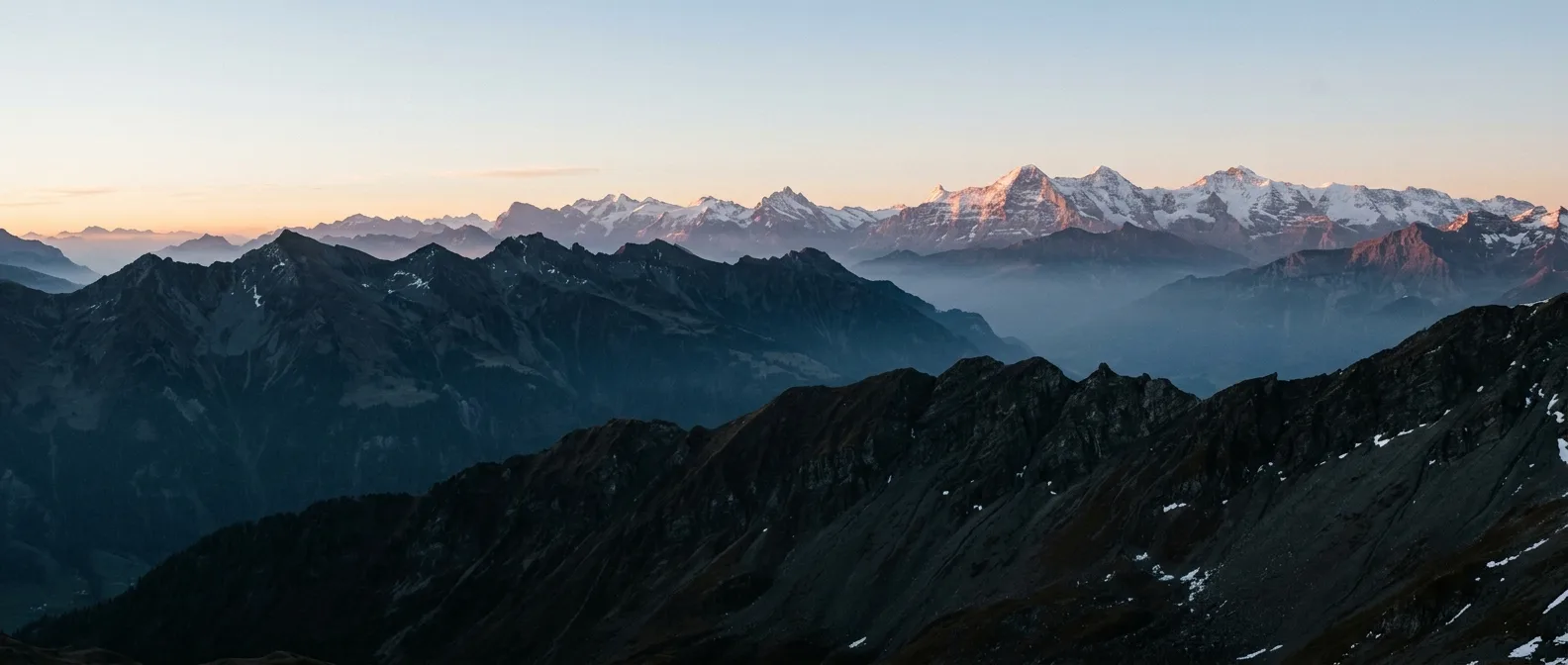
01 / The idea
Small numbers, and the willingness to say no.
Feldweg means field path — the track that takes the long way round the hill because that is where the walking is good. It is not a summit-count. Three of us guide here, we have between us fifty years in this one range, and we have no ambition to work in another.
Four guests per guide is the whole operating model rather than a detail in the small print. A rope of four moves at a pace where the guide can watch each person rather than manage a queue, and moving quickly is the safety margin that matters most once you are above the huts. It also means we run fewer days a season than we could, which we have made peace with.
We turn trips down, and we cancel trips we have already sold. Roughly one in six across a season, for conditions. That number is on this page rather than buried in the terms because it is the single most useful thing you can know about a guiding company before you book one.
02 / Tours
Five objectives, printed as they are.
Vertical gain is cumulative over the whole tour and grades are the Swiss alpine scale. Season windows are the ones we actually run, not the ones that fit a brochure. Open a row for the detail.
-
Three days on the Blüemlisalp horseshoe, sleeping at the hut both nights. The traverse is the point; the summit is one hour of it.
Day one is the long approach from Griesalp with skins on before the light. Day two takes the traverse itself — Wyssi Frau, Morgenhorn, and the descent onto the Kanderfirn if the snow allows. Day three walks out.
The crux is not technical. It is being on the right aspect at the right hour, which is why we start at 04:30 and are usually back at the hut before the afternoon turns the snow to soup.
What it asks of you Comfortable skiing red pistes off-piste in variable snow. Previous skin-track experience helpful, not required.
Enquire about Blüemlisalp Traverse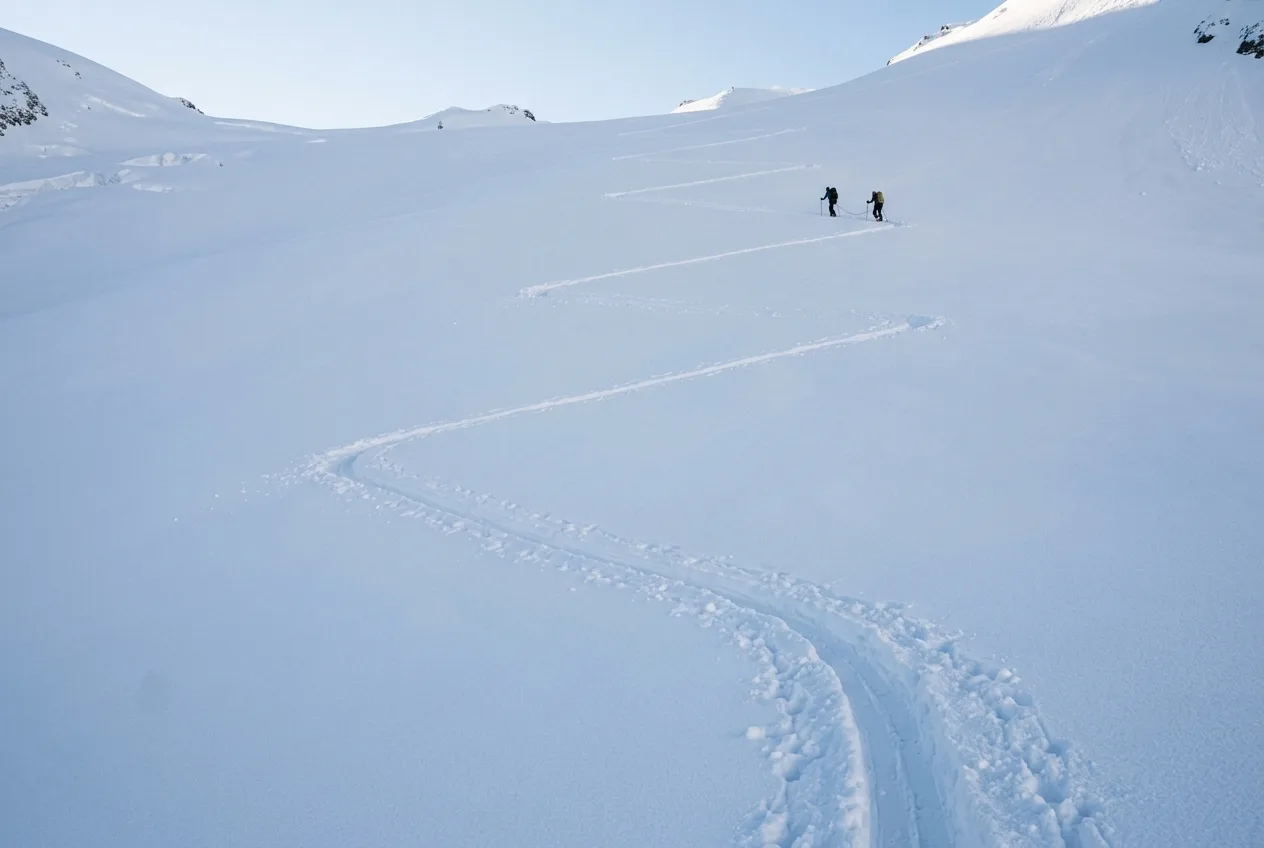
01 Ski touring — April – early June -
The line you see from the Kandersteg valley floor. A hut night at the Doldenhornhütte, then a long ridge on good rock.
Up to the hut in the afternoon, roughly three hours. Away by 04:00, on the ridge for first light, and moving together on the easier ground with short pitches where it steepens.
It is a long day — twelve hours car to car is normal, not a sign that something went wrong. Fitness matters here more than climbing grade.
What it asks of you Sustained movement on exposed ground for a full day. You should be steady on a via ferrata without needing the cable.
Enquire about Doldenhorn North Ridge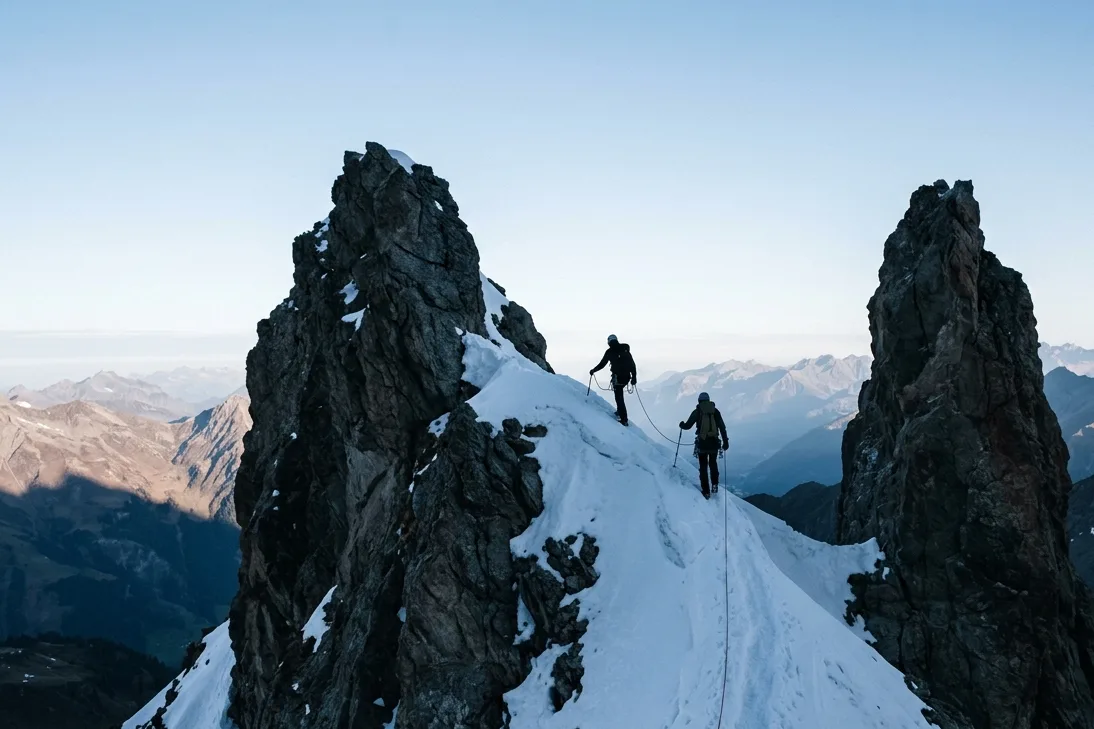
02 Alpine ascent — July – September -
Four days across the Wildstrubel massif, hut to hut, with the Lämmeren basin in the middle of it. The most snow, the fewest people.
A rounded, generous massif that rewards patience rather than nerve. Big open basins, long descents, and two of the quieter huts in the range.
This is the tour we run most often with people who have done one ski-touring week elsewhere and want to know whether they actually like multi-day travel. Most find out on day two.
What it asks of you One prior touring day or a good off-piste week. Ability to carry a light overnight pack for four days.
Enquire about Wildstrubel Ski Traverse 03 Ski touring — March – early May -
Our hardest listed objective. Serious, quiet, rarely crowded, and the one we turn down most often on conditions.
Sustained mixed ground with a genuine sense of commitment high on the ridge. The rock is good where it matters and loose where it does not, which is the usual arrangement.
We run this with two guests maximum, not four. If you have not climbed with us before, we will ask you to do the Doldenhorn first — not as a sales technique, but because the retreat from halfway up this ridge is worse than the ascent.
What it asks of you Prior alpine routes at AD. Confident on rock to UIAA IV with a pack, in boots.
Enquire about Gspaltenhorn West Ridge 04 Alpine ascent — July – August -
Five days walking over the range instead of around it, sleeping in a different hut each night and finishing in another valley.
Glacier travel on the Kanderfirn, one straightforward pass each day, and evenings that go on longer than the ascents. Roped for the glacier sections, walking otherwise.
The name of the company is on this one. It is not the hardest thing we do and it is the trip people write to us about afterwards.
What it asks of you Six to seven hours walking on consecutive days with a 9 kg pack. No prior glacier experience needed.
Enquire about Kandersteg – Lötschental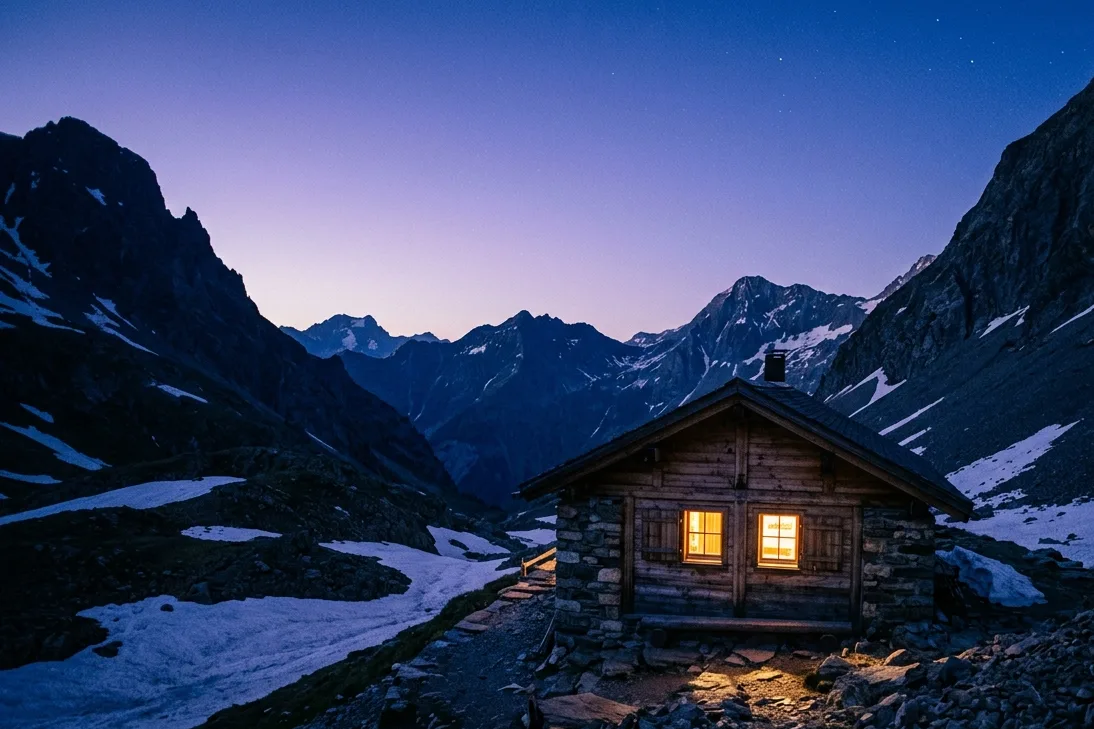
05 Hut-to-hut traverse — Mid-July – September
Objectives outside this list are possible in the same range — ask, and we will tell you plainly whether it is a good idea this season.
03 / The guides
Three people, one range, no roster.
You will know which of us you are climbing with before you book, and it will be the same person on the day. First names only here — we are a small company, and you will have ours soon enough.
-
Grew up two valleys west and has been guiding the Blüemlisalp horseshoe since her aspirant years. Skis better than she will tell you and is the reason our ski-touring season closes earlier than most.
-
Spent four seasons as a hut warden before qualifying, which is why he plans days around when the snow will soften rather than when the alarm goes off. Handles most of our rock objectives.
-
Came to Kandersteg for one winter in the early 2000s and did not leave. Has turned back on the Gspaltenhorn more times than he has topped out, and considers that the correct ratio.
04 / How a day runs
A summit day, hour by hour.
Nothing here is a surprise on the morning. This is a typical two-day ascent from a hut — the times move with the season and the snow, the shape does not.
-
04:15
Wake
The warden has the lights on. You packed last night, so this takes ten minutes.
-
04:40
Breakfast, and the decision
Bread, cheese, coffee. Your guide has been outside already and tells you what the night refreeze did. If the answer is wrong, we say so here rather than at 3,000 m.
-
05:10
Away from the hut
Head torches for the first hour. Slow on purpose — the pace that feels too easy at the start is the pace that gets you back.
-
07:30
Rope on
Where the ground demands it. Short pitches, or moving together on the easier sections. We explain what we are doing and why, every time.
-
09:00
Summit, or not
Fifteen minutes, usually less. A summit in bad light with weather coming is a place to leave, not a place to sit.
-
12:30
Back at the hut
Soup, boots off. On a traverse day this is when the second half begins; on a summit day it is finished.
-
16:00
Valley
Kandersteg, in time for a train. We debrief on the walk out, not over a form.
What is included
Guiding, technical equipment, hut half-board and the mountain transport on the route. Not included: travel to Kandersteg, your own clothing and boots, and rescue insurance.
05 / Safety & judgement
What we are certified to do, and what we will refuse.
The part of a guiding company that matters most is the part that is hardest to photograph. So it is written down instead.
-
01
Certification
All three of us hold the IFMGA mountain guide carnet — the full international qualification, not a single-discipline leader award. It is re-validated on the schedule the association sets, and we carry it.
-
02
Group size
Four guests per guide, maximum, on every tour we list. On the Gspaltenhorn it is two. A smaller rope moves faster, and speed is the safety margin that matters most in the mountains.
-
03
Weather and conditions
We read the SLF avalanche bulletin and the mountain forecast daily from ten days out, and we go and look for ourselves the day before. The bulletin is the floor of the decision, not the whole of it.
-
04
When we call it off
We cancel for conditions more than most operators do — roughly one trip in six across a season. If we cancel before you travel, you are refunded in full within five working days. If we cancel once you have arrived, you are refunded for every unrun day and we will try to find something else worth doing in the range instead. There is no weather clause that lets us keep your money for a trip that did not happen.
-
05
What you carry
Transceiver, probe and shovel on every winter day, worn and checked at the trailhead — no exceptions, and yes, we do practise with them. Technical equipment is included; personal clothing and boots are yours. Rescue insurance is your responsibility and we will tell you plainly what cover you need.
If anything above is unclear, ask before you book rather than after. Write to hallo@feldweg.example.
06 / Enquiry
Tell us what you are thinking about.
Three sentences is plenty. One of the three of us reads it and writes back — usually the guide who would take you out.
- Reply
- Within two days
- Deposit
- None until dates are fixed
- hallo@feldweg.example
- Base
- Kandersteg, Switzerland
We do not publish a phone number. Everything worth agreeing about a tour is easier to get right in writing, and we are usually out.
Demonstration form. Feldweg is a concept project — this form validates and runs through its loading, success and error states locally, and sends nothing to anyone.
Enquiry received
We will write back within two days.
Whichever of us would take you out will answer — with an honest read on whether the tour suits you this season, and what to do instead if it does not.